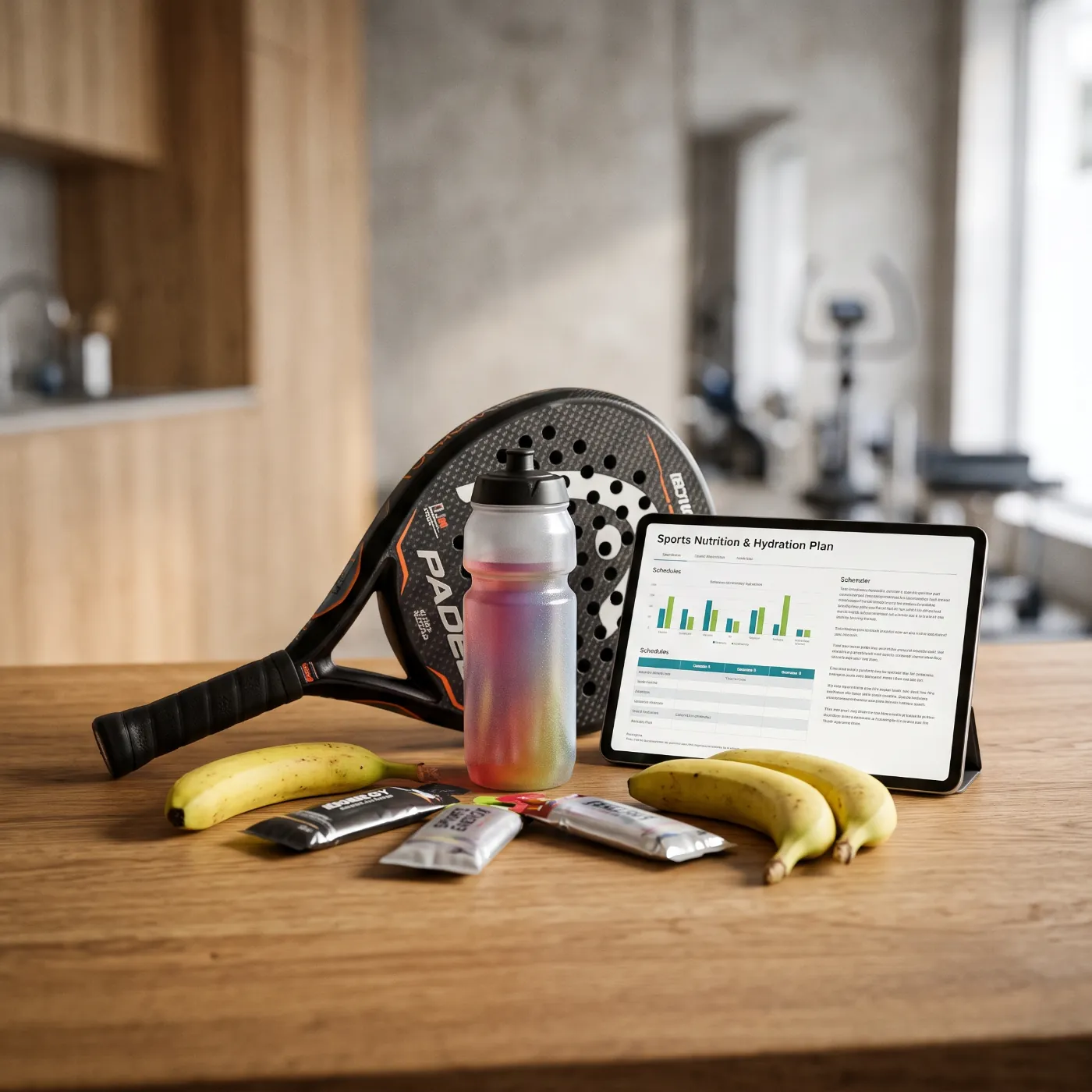
Padel has its own effort profile: points lasting a few seconds with changes of direction, braking and overhead shots, separated by short breaks. A three-set match can last over two hours, and in a tournament players compete several days in a row, sometimes twice on the same day.
This defines three specific problems nutrition has to solve: keeping energy available for explosive efforts, controlling the loss of fluids and salts, and recovering enough to compete again the next day.
1. Energy for intermittent effort
Points are sustained by muscle glycogen, the fuel the body uses in high-intensity efforts. When it runs out, it isn't only shot power that drops: reaction speed and decision quality drop too, which in padel matter as much as fitness.
Competition days
Carbohydrate intake goes up compared with light training days. It isn't loading for the sake of it: it is adjusted to the number of matches planned and the time they are played.
Pre-match meal
Three to four hours before, with easily digested carbohydrates, moderate protein and little fat and fibre, which slow gastric emptying and cause heaviness.
During the match
In long matches, carbohydrates during breaks, in liquid or gel form, which are better tolerated than solid food at high intensity.
2. Hydration and salts, the most neglected point
On indoor courts and in the heat, sweat loss is considerable and varies greatly between players. Some lose little sodium and others a lot, which completely changes the strategy.
A player with recurring cramps in the third set almost never has a magnesium problem: they have a sodium and fluid volume problem. It is solved by measuring how much they lose and replacing it accordingly.
The practical side is simple to set up: weigh yourself before and after several matches to know your real loss, and from that figure decide how much to drink per hour and with what concentration of salts. Drinking only water in long, sweaty matches is one of the most common causes of a slump in the third set.
3. Recovery between matches
In a tournament, the window right after the match is the most valuable of the whole day. The aim is to replenish glycogen, provide protein for muscle repair and recover lost fluids.
First hour after the match
Carbohydrates and protein together, in an amount the player tolerates well. If there is another match the same day, carbohydrates and fluids are the absolute priority.
Full meal afterwards
With more volume, enough protein and vegetables. This is where real recovery happens, not in the shake.
Sleep
It is the part of recovery no supplement can replace. It affects tissue repair and cognitive performance the next day.
Body composition: power without losing mobility
Padel rewards acceleration over very short distances and constant changes of direction. Excess body fat directly penalises these movements, but losing weight aggressively during the season penalises them even more: you lose muscle, power and recovery capacity.
That is why changes in body composition are planned outside competition periods and monitored with bioimpedance, to make sure what is lost is fat and not muscle.
Supplements: few and well chosen
Food is the foundation. That said, some aids with solid evidence make sense in padel: caffeine, for its effect on attention and perceived effort in long matches; creatine, for its role in repeated high-intensity efforts; and drinks with carbohydrates and sodium during play. Everything else case by case, with a specific reason behind it.
The most common mistake
Improvising on tournament day. Digestive tolerance and hydration strategy are rehearsed in training, not tried for the first time in competition. A plan the player has already tested several times is worth more than a perfect plan on paper.